
Bone Grafting: Preparing for Secure Dental Implants
Dental implants are one of the most reliable, long-lasting ways to replace missing teeth. They look natural, function like real teeth, and help preserve jawbone health over time. But what many patients don’t realize is that successful implant placement sometimes requires preparation—specifically, bone grafting.
At Allure Dental, bone grafting is a common and highly effective procedure used to create the strong foundation dental implants need to thrive. With decades of clinical experience, Dr. Christian Mazur and the team routinely perform bone grafting to ensure implant stability, longevity, and optimal function.
If you’ve been told you don’t have enough bone for implants, or you’re simply exploring your options, understanding the role of bone grafting can help you move forward with confidence.
Why Bone Matters for Dental Implants
A dental implant is a small, threaded titanium post that is placed into the jawbone to act as an artificial tooth root. Once placed, it integrates with your natural bone in a process called osseointegration.
For this integration to occur successfully, there must be:
- Adequate bone width
- Sufficient bone height
- Healthy bone density
When teeth are lost, the jawbone in that area begins to shrink over time. This process, known as bone resorption, can reduce the amount of available bone, sometimes making implant placement more challenging.
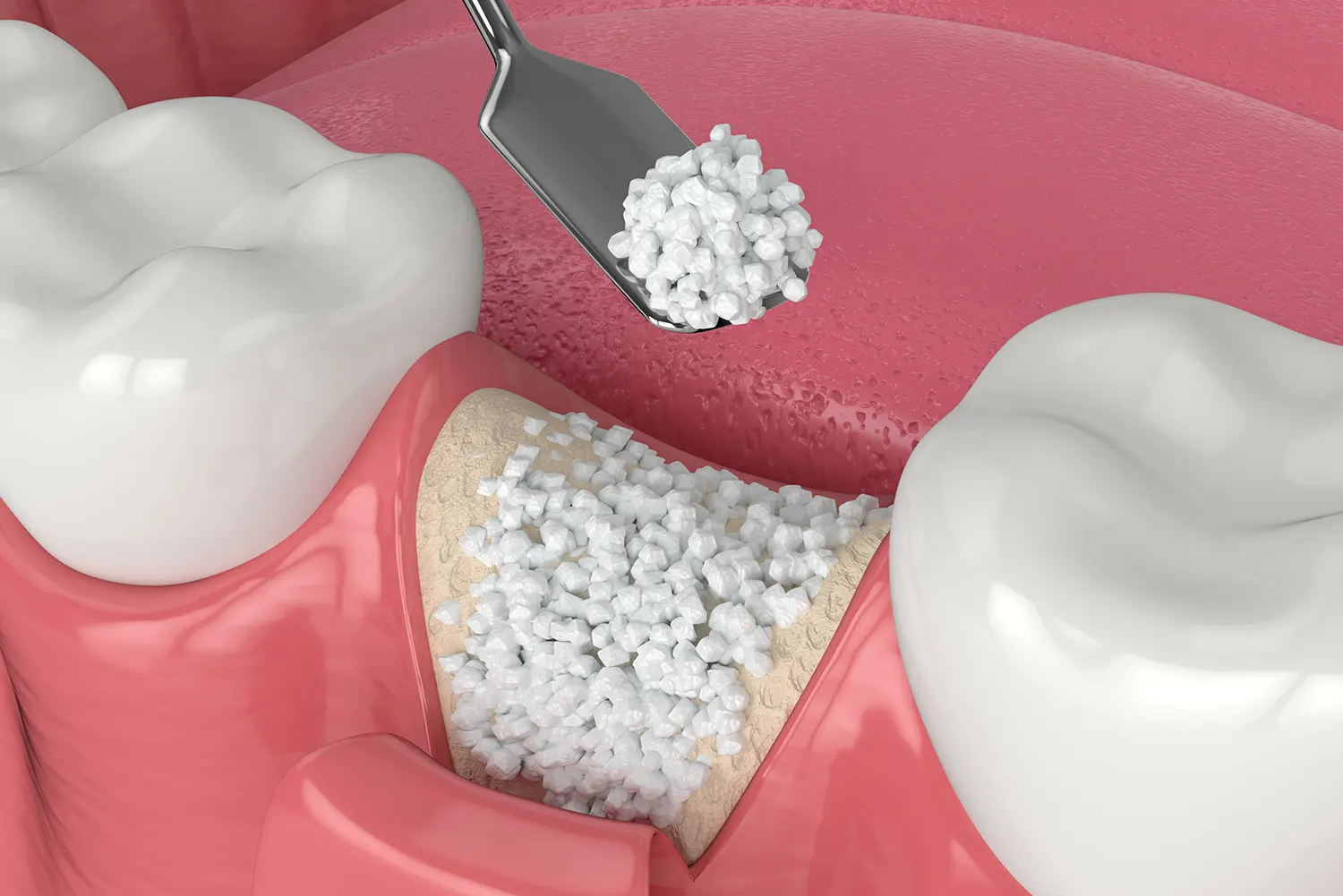
Bone grafting allows us to rebuild or reinforce these areas so implants can be placed securely.
What Is Bone Grafting?
Bone grafting involves placing a specific material—often a decalcified bone matrix—into an area where bone is deficient. This material acts as a scaffold, encouraging your body to regenerate and mineralize new bone in that space.
Over time, your body incorporates the graft into its natural structure. The healing process is gradual and biological, allowing your jaw to remodel and strengthen around the grafted site.
Bone grafting may be recommended in several situations:
- When the ridge is too narrow to support an implant
- When there isn’t enough vertical height
- After a tooth extraction where infection caused bone loss
- When lifting the sinus floor to create room for upper implants
Each case is unique, but the goal is always the same: to create a stable, long-term foundation for your implant.
Common Bone Grafting Procedures
Ridge Augmentation
If the jaw ridge is too thin or narrow, bone grafting can widen the area. This provides more surface area for the implant to engage securely.
By increasing ridge width, we improve both the structural support and the aesthetic outcome of the final restoration.
Sinus Elevation (Sinus Lift)
In the upper back jaw, the sinus cavity sometimes limits how much bone is available for implant placement. A sinus lift gently elevates the sinus floor, creating space where bone grafting material can be added.
This process:
- Adds vertical height
- Engages multiple layers of natural bone
- Improves implant stability
By strengthening the interface between the implant and cortical bone layers, we enhance long-term success.
Socket Grafting After Extraction
When a tooth is removed, especially one affected by infection or periodontal disease, the surrounding bone may already be compromised. Placing a graft at the time of extraction helps preserve the site and prepares it for future implant placement.
This proactive step can reduce the need for more extensive grafting later.
What to Expect During Healing
Patients are often surprised to learn that implant placement and bone grafting are typically well tolerated. In fact, some patients report that implant placement feels easier than the original tooth extraction.
Here’s what happens after grafting and implant placement:
- The implant is placed and held mechanically in position by its threads.
- Over the next three to four months, your body remodels bone around the implant.
- The graft material mineralizes and becomes integrated into your natural bone structure.
Initial healing may involve mild discomfort for a few days, which is normal and manageable. After that, the body continues its natural remodeling process beneath the surface.
The key is patience—true stability develops over time as your bone strengthens around the implant.
Why Successful Bone Grafting Matters
Bone grafting significantly improves implant success by:
- Increasing surface area around the implant
- Providing better depth and width
- Enhancing stability in multiple bone layers
- Reducing the risk of implant failure
For patients who have experienced significant bone loss—sometimes due to years of missing teeth—grafting can be transformative.
In more advanced cases, patients who thought dentures were their only option may qualify for implant-supported prosthetics after bone grafting. These solutions can provide:
- Greater chewing efficiency
- Improved comfort
- Better stability
- A more natural feel
In some situations, patients can even receive dentures without a bulky palate, improving taste sensation and overall comfort.
Being able to rebuild bone in areas once considered unsuitable opens doors to more functional, secure, and confidence-boosting solutions.
Advanced Technology for Precision Planning
At Allure Dental, 3D imaging technology plays a crucial role in evaluating and planning treatment .
Using detailed digital scans, we can:
- Virtually map implant placement
- Identify areas of sufficient or insufficient bone
- Determine whether grafting is necessary
- Plan precise surgical positioning
This technology allows for predictable outcomes and personalized treatment planning. Rather than guessing, we make data-driven decisions that optimize safety and success.
Restoring Function, Stability, and Confidence
Some of the most rewarding cases involve patients who have experienced progressive tooth loss over many years. As bone gradually diminishes, options become more limited.
Bone grafting changes that equation.
By rebuilding the foundation, we can place implants strategically and design prosthetics that restore function and confidence. Patients regain the ability to chew comfortably, speak clearly, and feel secure in social situations.
It’s not just about replacing teeth—it’s about restoring quality of life.
Schedule Your Bone Grafting & Implant Consultation in Lafayette, IN
If you’ve been told you don’t have enough bone for dental implants—or if you’re exploring long-term tooth replacement options—bone grafting may be the key to making implants possible.
At Allure Dental, we provide advanced bone grafting and implant treatment in Lafayette, IN using precise 3D planning and decades of surgical experience. Our team will evaluate your unique anatomy, explain your options clearly, and create a customized plan designed for long-term success.
Call today to schedule your consultation and take the next step toward secure, stable dental implants in Lafayette, IN.
Related Posts

Invisalign Beyond Straight Teeth: What Experienced Invisalign Treatment Can Really Accomplish
Dental Implants vs. Bridges: Why a Permanent Root Replacement Is a Superior Investment
Invisalign for Complex Bite Issues in Lafayette: More Than a Cosmetic Fix
